
Brisbane from Mt Cootha
Other

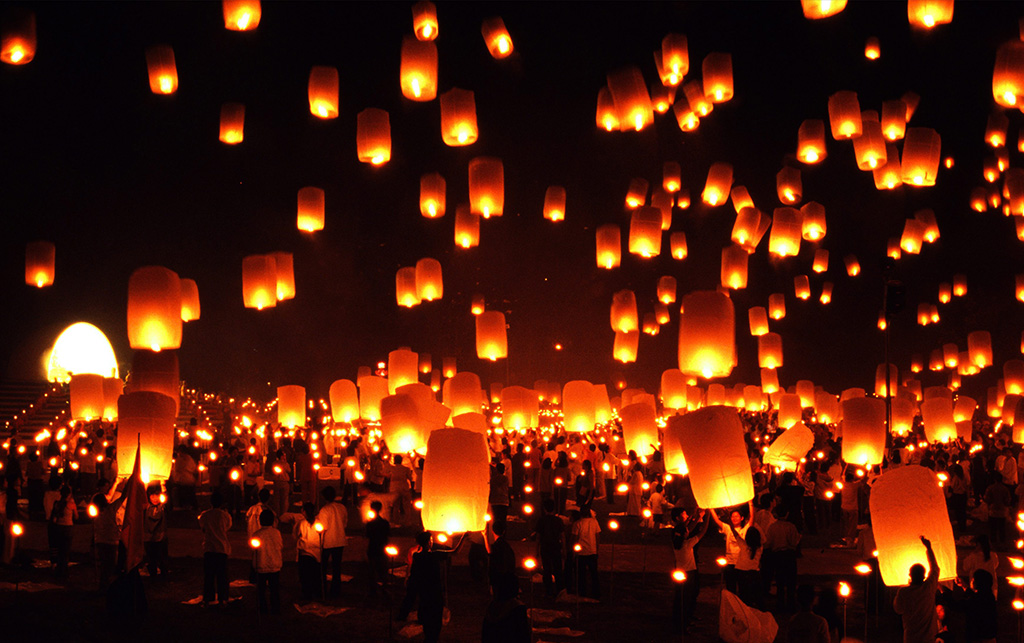
Chinese New Year is an important Chinese festival celebrated at the turn of the Chinese calendar. It is also known as the Spring Festival, the literal translation of the modern Chinese name. Chinese New Year celebrations traditionally run from Chinese New Year's Eve, the last day of the last month of the Chinese calendar, to the Lantern Festival on the 15th day of the first month, making the festival the longest in the Chinese calendar. The first day of the New Year falls between January 21 and February 20. Chinese New Year is centuries old and gains significance because of several myths and traditions. Traditionally, the festival was a time to honour deities as well as ancestors.[2] Chinese New Year is celebrated in countries and territories with significant Chinese populations, including Mainland China, Hong Kong,[3] Macau, Taiwan, Singapore,[4] Thailand, Indonesia, Malaysia, Mauritius,[5] and the Philippines.[6][7] Chinese New Year is considered a major holiday for the Chinese and has had influence on the lunar new year celebrations of its geographic neighbours. Within China, regional customs and traditions concerning the celebration of the Chinese New Year vary widely. Often, the evening preceding Chinese New Year's Day is an occasion for Chinese families to gather for the annual reunion dinner. It is also traditional for every family to thoroughly cleanse the house, in order to sweep away any ill-fortune and to make way for good incoming luck. Windows and doors will be decorated with red color paper-cuts and couplets with popular themes of "good fortune" or "happiness", "wealth", and "longevity." Other activities include lighting firecrackers and giving money in red paper envelopes. Although the Chinese calendar traditionally does not use continuously numbered years, outside China its years are often numbered from the reign of the 3rd millennium BC Yellow Emperor. But at least three different years numbered 1 are now used by various scholars, making the year beginning AD 2015 the "Chinese year" 4713, 4712, or 4652.[8]
Brisbane from Mt Cootha

Other

The festivities surrounding Chinese New Year were known as the Nian festival (Chinese: 年节; pinyin: Nián Jié), which may be understood to as "Festival of the Year", or "New Year Festival". A derivative term, Guo Nian (traditional Chinese: 過年; simplified Chinese: 过年; pinyin: guò Nián; literally: "to pass the year"), is still commonly used to refer to the act of celebrating the arrival of the new year. An alternative name for Chinese New Year is "New Year in the Agricultural Calendar" (Chinese: 农历新年; pinyin: Nónglì Xīnnían), the "Agricultural Calendar" being one of the more common Chinese language names for the Chinese calendar in China. New Year's Day itself was traditionally named Yuandan (Chinese: 元旦; pinyin: Yuándàn), literally "the first sunrise", but in 1913 the recently established Republic of China government appropriated that name to refer instead to New Year's Day in the newly adopted Gregorian Calendar, with Chinese New Year instead being called "Spring Festival" (Chinese: 春节; pinyin: Chūnjié), which remains the official name for the New Year's Day public holiday in both mainland China and Taiwan. Now, Yuandan refers to the first day of one year according to solar calendar[9] and it is the same day with western New Year's Day in spite of the time difference. Prior to 1913, "Spring Festival" instead referred to lichun, (February 4 or 5), the first solar term in a Chinese calendar year, which marked the end of winter and start of spring. An alternative name for Chinese New Year's Day means literally "the first day of the (great) year" (Chinese: (大)年初一; pinyin: (Dà) Nián Chūyī). The New Year's Day public holiday in Hong Kong and Macau is named in Chinese, as literally "First Day of the Year in the Agricultural Calendar" (Chinese: 农历年初一; pinyin: Nónglì Nián Chūyī) while the official English name is "The First Day of Lunar New Year". Chinese New Year's Eve, a day where Chinese families gather for their annual reunion dinner, named as Nian Ye Fan, is known as "Evening of the Passing" (Chinese: 除夕; pinyin: Chúxī).